
Termites
Home » Services » Pest Catalog » Termites
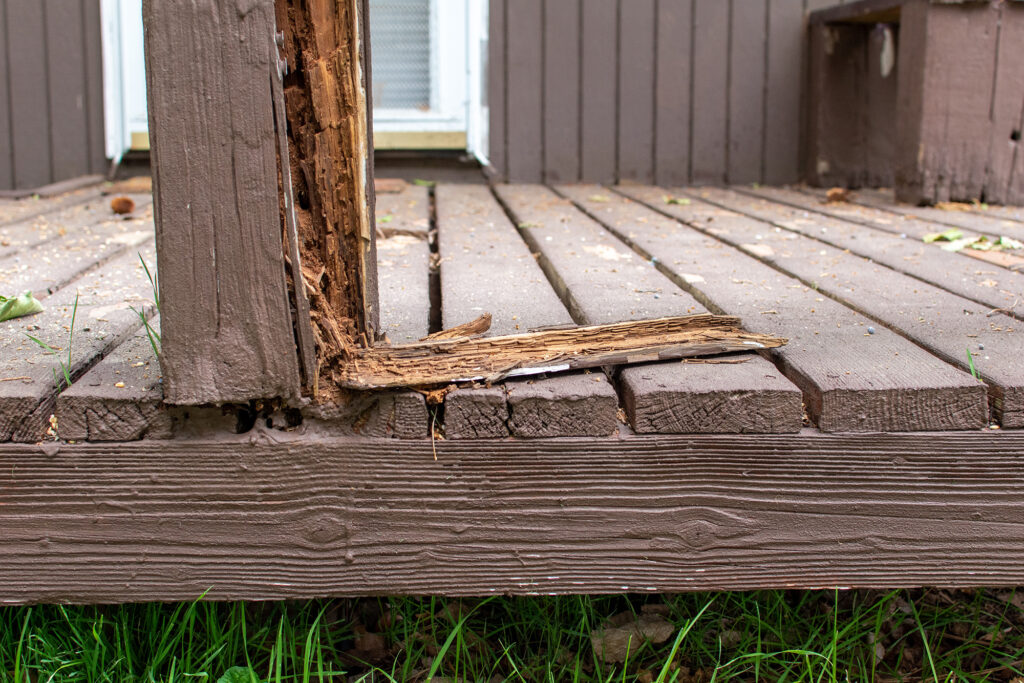
Termites love wood. They eat it and make their homes out of it. Like ants, they are social insects and a single nest can house thousands or even millions of individuals. While a lone termite poses no real threat, a colony can wreak havoc on a home, causing structural weakening and compromising its integrity over time.
While most termites live in tropic regions, there are several species common to Connecticut, the most widespread of which is the subterranean termite.
Are termites dangerous?
Termites are a threat because of the risk they pose to buildings and wooden structures. It is estimated that termites cause billions of dollars in property damage every year in the US. This is partially due to the fact that homeowners’ insurance often doesn’t cover termite damage.
Why do I have a termite problem?
If there are termites on your property, it’s because they’ve come across a suitable shelter and food source. Wood piles, downed trees, stumps, and leaf piles attract these critters. Once they’ve moved in, it’s likely they will eventually work their way into your home or office.
Where will I find termites?
Termites typically live underground or within wooden structures, meaning you’re unlikely to find them unless you’re looking. An infestation can easily go unnoticed for months or even years. Usually, they’re only detected because of the tell-tale signs they leave behind. Termites prefer to travel through moist soil and build long mud tubes along structures to facilitate their movements. Wood pockmarked with tiny holes is also a clear indicator of a termite presence.
How can I prevent a termite infestation?
- Treat wood structures: If you are constructing or renovating a wooden structure, consider treating the wood with termite-resistant chemicals or using naturally resistant types of wood, such as cedar or redwood.
- Remove wood-to-soil contact: Ensure there is no direct contact between wooden structures (such as foundations, fences, or decks) and the soil. Use concrete or metal barriers to separate wood from the ground.
- Maintain proper drainage: Fix any water leaks or moisture issues around your property promptly. Ensure that gutters and downspouts are functioning correctly and direct water away from the foundation.
- Store firewood properly: Keep firewood stacked away from your home and elevated from the ground. Store it at least 20 feet away from the house.
- Remove wood debris: Clear away fallen trees, stumps, or wood debris from your yard.
- Seal cracks and crevices: Inspect and seal any cracks or openings in your home’s foundation, walls, or utility lines.
- Install termite barriers: Consider installing physical or chemical barriers around the perimeter of your home. Physical barriers like stainless steel mesh or sand can deter termites from reaching your structure. Chemical barriers, applied by professionals, can help prevent termite infestations.
- Regular inspections: Schedule regular termite inspections by a professional pest control service. They can detect early signs of termite activity and provide appropriate preventive treatments if necessary.
How do I get rid of termites?
Termiticides and bait traps can help deter termites and may even be sufficient for smaller infestations. However, if a large colony has moved onto your property, a professional pest control service is needed to fully root it out. Northeast Exterminating has the tools and experience to quash any infestation, safeguarding your home or office and saving you thousands of dollars in potential repair costs.
We are experts in the field of pest control and stake our reputation on professional service. All pests are not equal in the sense that they all require a special means of control, and select pesticide to be applied. A member of our team will discuss with you the best possible solution for your specific problem to ensure you get the optimum result quickly.
1-203-468-2847
Manage Consent
We use cookies to analyze site usage. By clicking 'Accept', you consent to our use of these cookies. You can manage your preferences or learn more in our Privacy Policy link.
Functional Always active
The technical storage or access is strictly necessary for the legitimate purpose of enabling the use of a specific service explicitly requested by the subscriber or user, or for the sole purpose of carrying out the transmission of a communication over an electronic communications network.
Preferences
The technical storage or access is necessary for the legitimate purpose of storing preferences that are not requested by the subscriber or user.
Statistics
The technical storage or access that is used exclusively for statistical purposes.
The technical storage or access that is used exclusively for anonymous statistical purposes. Without a subpoena, voluntary compliance on the part of your Internet Service Provider, or additional records from a third party, information stored or retrieved for this purpose alone cannot usually be used to identify you.
Marketing
The technical storage or access is required to create user profiles to send advertising, or to track the user on a website or across several websites for similar marketing purposes.