
Lawn Nesting Bees
Home » Services » Pest Catalog » Lawn Nesting Bees
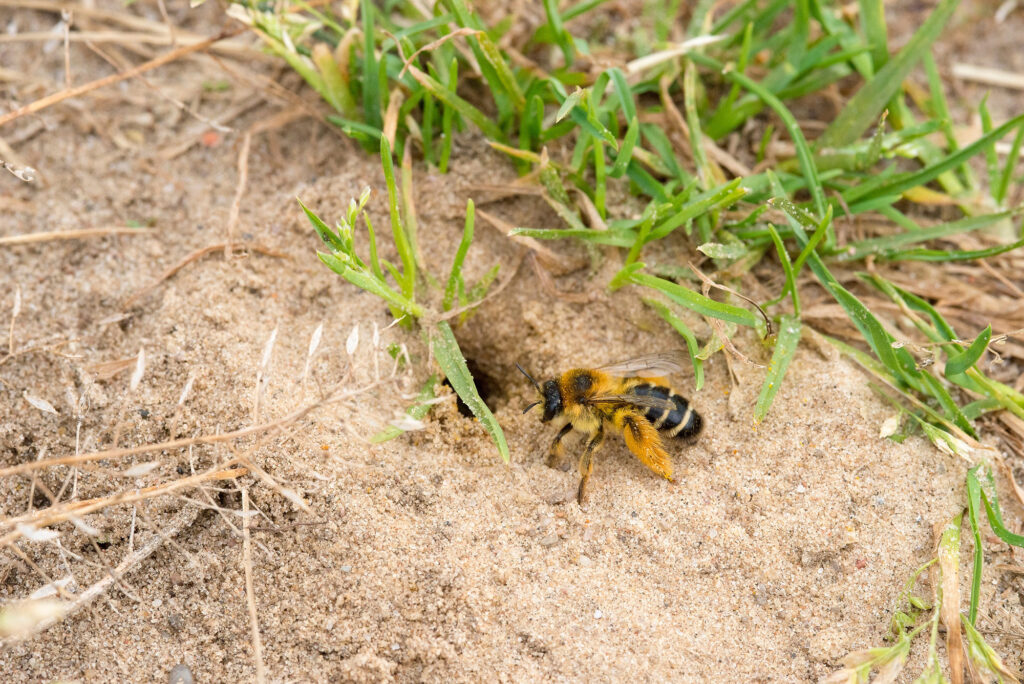
Lawn nesting bees are solitary bees that build their nests in bare or lightly vegetated patches of soil. In Connecticut, species such as miner bees, digger bees, and sweat bees frequently nest in residential lawns during spring and early summer. These bees are small, often ¼ to ½ inch long, and typically have dark, metallic, or striped bodies depending on the species. Although they may look alarming when many nest in the same area, they are generally gentle, beneficial pollinators that pose little threat to people.
Are lawn nesting bees dangerous?
Lawn nesting bees are not aggressive and rarely sting. Because they are solitary, they do not defend their nests the way social wasps or hornets do. Stings are uncommon and usually occur only if a bee is accidentally stepped on or handled. The main concern for homeowners is aesthetic: multiple bees creating small soil mounds can give the appearance of a widespread infestation. However, these bees are important pollinators and cause minimal harm to the lawn itself.
Why do I have a lawn nesting bee problem?
Lawn nesting bees choose areas where the soil is dry, loose, and exposed to sunlight. Lawns with thin grass cover, compact patches of ground, or areas that receive little irrigation are especially attractive. They dig small tunnels into the soil to lay their eggs, and several females may nest in the same general area when conditions are ideal. These bees are seasonal and typically appear for only a few weeks each year. If your yard has bare spots or sandy soil, it may be inviting to them.
Where will I find lawn nesting bees?
You will usually find lawn nesting bees in sunny, open areas of your yard where the soil is easy to dig. Their presence is most noticeable in early spring or summer when small mounds of loose soil, each with a single entrance hole begin to appear. Bees may hover low to the ground as they come and go from their individual nests. Activity is typically concentrated in dry patches, sloped areas, near walkways, or anywhere with sparse turf that allows easy burrowing.
How can I prevent a lawn nesting bee infestation?
- Improve turf density: Overseed thin areas and maintain healthy grass growth to reduce bare soil.
- Water the lawn regularly: Moist soil is less attractive to nesting bees, especially during early spring.
- Reduce soil compaction: Aerate your lawn to promote thick growth and reduce exposed patches.
- Fill bare spots: Apply topsoil and seed to cover areas where nests commonly appear.
- Adjust mowing practices: Avoid mowing too short, as this can thin the lawn and expose more soil.
- Limit ground disturbance: Refrain from removing vegetation down to bare dirt when possible.
How do I get rid of lawn nesting bees?
Although lawn nesting bees are beneficial, their sudden appearance can cause concern for families, especially in high-traffic yard areas. If you are noticing numerous soil mounds, increased bee activity, or nests in places where children or pets play, contact Northeast Exterminating. Our technicians can identify the species, treat active nesting zones when appropriate, and provide guidance on long-term lawn improvements that discourage future nesting while keeping your yard safe and enjoyable.
We are experts in the field of pest control and stake our reputation on professional service. All pests are not equal in the sense that they all require a special means of control, and select pesticide to be applied. A member of our team will discuss with you the best possible solution for your specific problem to ensure you get the optimum result quickly.
1-203-468-2847
Manage Consent
We use cookies to analyze site usage. By clicking 'Accept', you consent to our use of these cookies. You can manage your preferences or learn more in our Privacy Policy link.
Functional Always active
The technical storage or access is strictly necessary for the legitimate purpose of enabling the use of a specific service explicitly requested by the subscriber or user, or for the sole purpose of carrying out the transmission of a communication over an electronic communications network.
Preferences
The technical storage or access is necessary for the legitimate purpose of storing preferences that are not requested by the subscriber or user.
Statistics
The technical storage or access that is used exclusively for statistical purposes.
The technical storage or access that is used exclusively for anonymous statistical purposes. Without a subpoena, voluntary compliance on the part of your Internet Service Provider, or additional records from a third party, information stored or retrieved for this purpose alone cannot usually be used to identify you.
Marketing
The technical storage or access is required to create user profiles to send advertising, or to track the user on a website or across several websites for similar marketing purposes.