
Mites
Home » Services » Pest Catalog » Mites
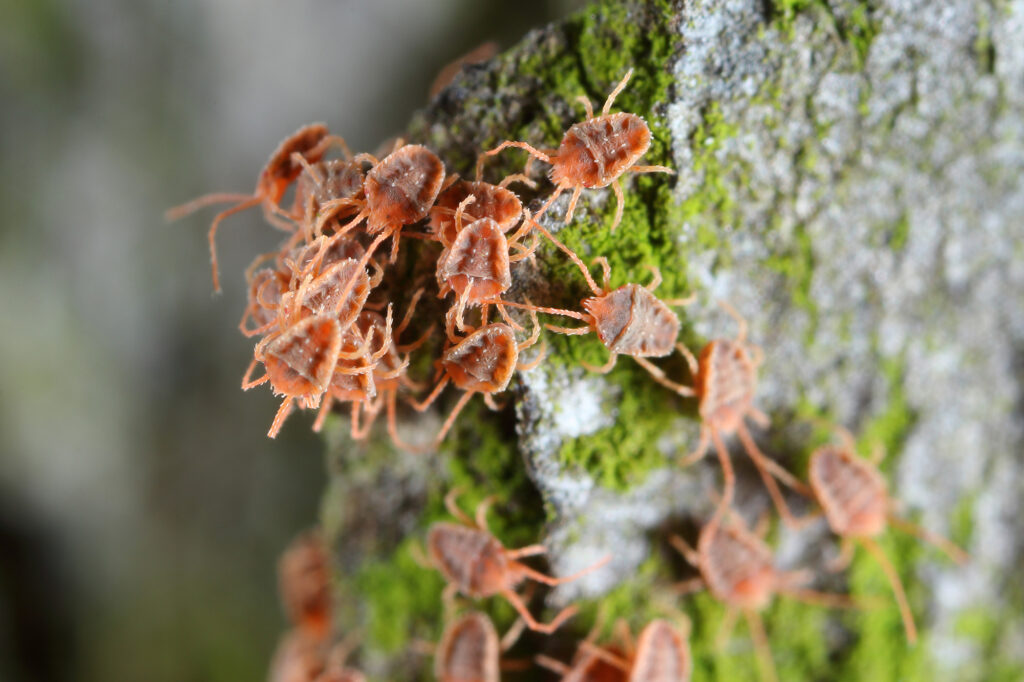
Mites are tiny arthropods that can become a nuisance when they invade homes or develop in large numbers. In Connecticut, the most common types that affect households are clover mites, dust mites, and bird or rodent mites. Clover mites often appear in large clusters around windows and walls.
Dust mites thrive indoors in humid environments and feed on skin flakes, though they are invisible to the naked eye. Bird and rodent mites occasionally move indoors when their animal hosts leave a nest or are removed. Though different in behavior, mites can create irritation, allergies, and noticeable indoor disruptions.
Are mites dangerous?
Most mites are not harmful to humans, but they can still cause issues. Clover mites do not bite, but they can stain surfaces when crushed. Dust mites don’t bite either, but they are a major indoor allergen and can trigger asthma symptoms, congestion, and respiratory discomfort. Bird and rodent mites, however, can bite when searching for a new host, leading to itchy, uncomfortable welts. While they do not transmit disease to humans, infestations can become distressing and may worsen until the source is addressed.
Why do I have a mite problem?
Different mites enter homes for different reasons. Clover mites often invade structures in large numbers during seasonal temperature shifts, especially in early spring, seeking warmth and shelter. Dust mites develop naturally in homes with high humidity, carpeting, and upholstered furniture, feeding on everyday household dust. Bird and rodent mites appear when their hosts, such as nesting birds or mice live in or near a home and then suddenly leave or are removed, forcing the mites to migrate to find a new food source. Moisture, warmth, and nearby wildlife activity all increase the likelihood of a mite issue.
Where will I find mites?
Clover mites usually gather on sunny exterior walls, windowsills, and siding before moving indoors through tiny cracks. Once inside, they are commonly seen crawling along walls, floors, and window frames. Dust mites thrive in hidden areas where dust collects, such as bedding, mattresses, carpets, curtains, and upholstered furniture, though they cannot be seen without magnification. Bird and rodent mites are often found in bedrooms, living rooms, or areas near attics, soffits, wall voids, and crawl spaces where their original hosts once nested or lived. Activity becomes more noticeable when bites or clusters of mites appear indoors.
How can I prevent a mite infestation?
- Reduce moisture: Use dehumidifiers and fix leaks to keep humidity levels low.
- Seal entry points: Caulk gaps around windows, doors, siding, and foundation cracks to prevent clover mite invasions.
- Manage vegetation: Keep grass, mulch, and shrubs trimmed back from the foundation to limit clover mite activity.
- Wash bedding regularly: Hot water laundering helps reduce dust mite populations.
- Clean frequently: Vacuum carpets, rugs, and upholstered furniture to limit dust buildup.
- Address wildlife issues: Remove abandoned bird nests and correct any rodent activity promptly.
- Improve ventilation: Ensure attics, basements, and crawl spaces have adequate airflow to discourage mite development.
- Choose protective covers: Use allergen-proof encasements for mattresses and pillows to reduce dust mite exposure.
How do I get rid of mites?
Mites can multiply quickly and become difficult to control without identifying the exact species and source of the problem. If you’re finding tiny reddish mites near windows, experiencing unexplained bites, or noticing allergy symptoms that seem to worsen indoors, contact Northeast Exterminating. Our technicians can determine the type of mite involved, locate contributing conditions, such as wildlife nests, moisture issues, or structural gaps and implement treatments tailored to the infestation. With professional assistance, your home can return to a comfortable, mite-free environment.
We are experts in the field of pest control and stake our reputation on professional service. All pests are not equal in the sense that they all require a special means of control, and select pesticide to be applied. A member of our team will discuss with you the best possible solution for your specific problem to ensure you get the optimum result quickly.
1-203-468-2847
Manage Consent
We use cookies to analyze site usage. By clicking 'Accept', you consent to our use of these cookies. You can manage your preferences or learn more in our Privacy Policy link.
Functional
Always active
The technical storage or access is strictly necessary for the legitimate purpose of enabling the use of a specific service explicitly requested by the subscriber or user, or for the sole purpose of carrying out the transmission of a communication over an electronic communications network.
Preferences
The technical storage or access is necessary for the legitimate purpose of storing preferences that are not requested by the subscriber or user.
Statistics
The technical storage or access that is used exclusively for statistical purposes.
The technical storage or access that is used exclusively for anonymous statistical purposes. Without a subpoena, voluntary compliance on the part of your Internet Service Provider, or additional records from a third party, information stored or retrieved for this purpose alone cannot usually be used to identify you.
Marketing
The technical storage or access is required to create user profiles to send advertising, or to track the user on a website or across several websites for similar marketing purposes.