
Cicada Killers
Home » Services » Pest Catalog » Cicada Killers
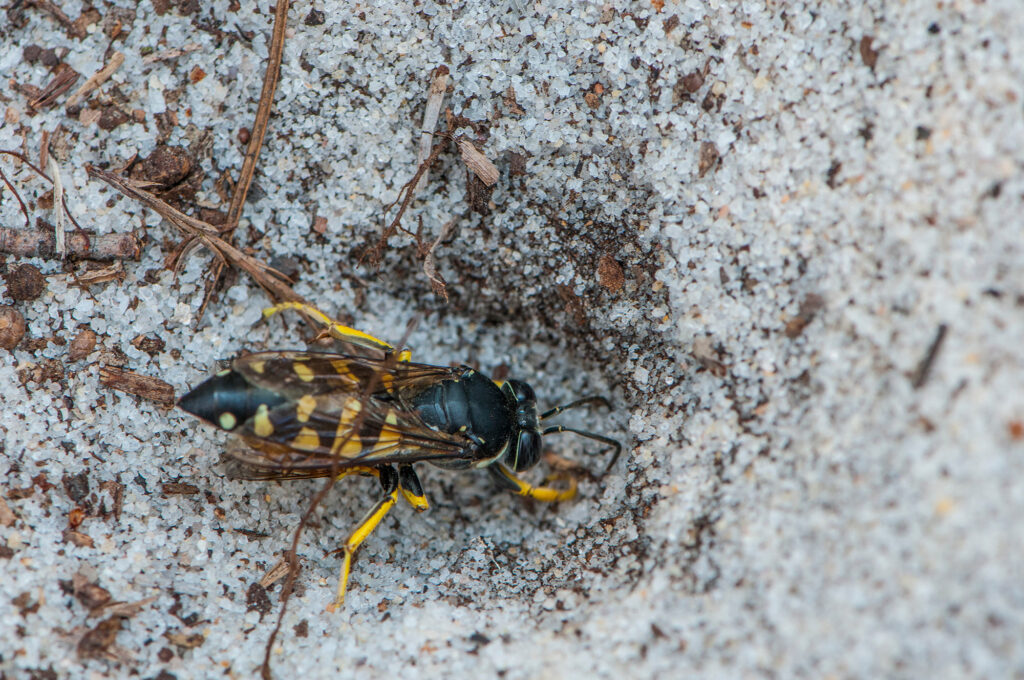
Cicada killers are large solitary wasps commonly found in Connecticut during mid- to late summer. Despite their intimidating size often 1.5 inches long, these wasps are far less aggressive than many people expect. They dig burrows in dry, sandy soil and hunt cicadas to feed their developing larvae. While they are not typically a threat to humans, their presence can be alarming, and their digging can damage lawns, playgrounds, and landscaped areas.
Are Cicada Killers dangerous?
Cicada killers look threatening but are generally not aggressive toward humans. Females can sting, but they rarely do unless handled or stepped on. Males cannot sting at all, though they may buzz around intruders in defense of their territory. The greater issue is often the disruption they cause to lawns or outdoor spaces, burrows can disturb soil, damage turf, and become unsightly. Their presence around walkways, playgrounds, or heavily used yards can also create anxiety for residents.
Why do I have a Cicada Killer problem?
Cicada killers prefer dry, well-drained, sandy soils where they can dig their burrows. Homes with loose soil, thin grass cover, newly seeded lawns, retaining walls, stone paths, or bare patches of earth provide ideal nesting sites. They are also drawn to areas with abundant cicadas, which serve as food for their young. If your yard offers both suitable soil and a good supply of cicadas, cicada killers may establish multiple burrows during the summer months.
Where will I find Cicada Killers?
Cicada killers create distinctive U-shaped or crescent-shaped mounds of loose soil near the entrances to their burrows. These burrows are usually found in dry, sandy, or lightly vegetated areas such as along patios, sidewalks, foundations, garden borders, playgrounds, and open lawns. You may see adults flying low to the ground as they patrol their nesting area or carrying cicadas back to their burrows. Activity is most noticeable during hot summer days when adults are hunting and digging.
How can I prevent a Cicada Killer infestation?
- Improve turf density: Maintain a healthy lawn to reduce bare, sandy areas that attract burrowing.
- Water dry patches: Keep soil slightly moist during peak activity periods, as cicada killers avoid damp soil.
- Reduce soil disturbance: Avoid creating new loose soil or sand areas where they can dig.
- Manage cicada populations: While not fully controllable, limiting yard debris may reduce attractive habitat for cicadas.
- Fill gaps and holes: Repair eroded soil, reseed thin patches, and level uneven ground.
- Block access points: Use mulch or landscaping fabric in garden borders where bare soil encourages burrows.
- Limit bright outdoor lighting: Reducing lights may help decrease cicada activity around the home.
How do I get rid of Cicada Killers?
While cicada killers are beneficial to the ecosystem, they can become a nuisance when they establish burrows in residential lawns or high-traffic areas. If you are noticing numerous burrows, low-flying wasps, or activity near walkways or public spaces, contact Northeast Exterminating right away. Our technicians can identify active burrows, apply safe and targeted treatments, and recommend long-term soil and lawn adjustments to discourage future nesting.
We are experts in the field of pest control and stake our reputation on professional service. All pests are not equal in the sense that they all require a special means of control, and select pesticide to be applied. A member of our team will discuss with you the best possible solution for your specific problem to ensure you get the optimum result quickly.
1-203-468-2847
Manage Consent
We use cookies to analyze site usage. By clicking 'Accept', you consent to our use of these cookies. You can manage your preferences or learn more in our Privacy Policy link.
Functional
Always active
The technical storage or access is strictly necessary for the legitimate purpose of enabling the use of a specific service explicitly requested by the subscriber or user, or for the sole purpose of carrying out the transmission of a communication over an electronic communications network.
Preferences
The technical storage or access is necessary for the legitimate purpose of storing preferences that are not requested by the subscriber or user.
Statistics
The technical storage or access that is used exclusively for statistical purposes.
The technical storage or access that is used exclusively for anonymous statistical purposes. Without a subpoena, voluntary compliance on the part of your Internet Service Provider, or additional records from a third party, information stored or retrieved for this purpose alone cannot usually be used to identify you.
Marketing
The technical storage or access is required to create user profiles to send advertising, or to track the user on a website or across several websites for similar marketing purposes.